What is POTS?

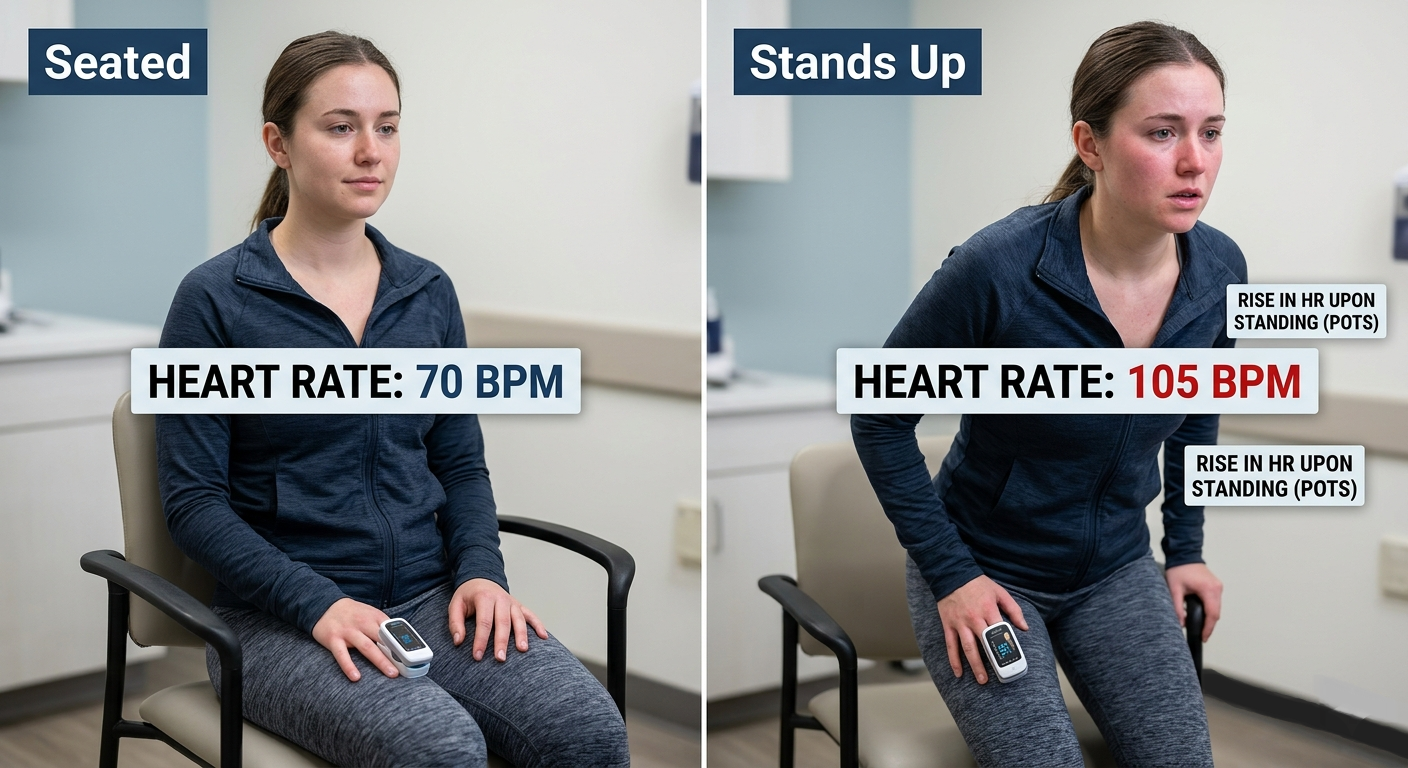
POTS stands for Postural Orthostatic Tachycardia Syndrome. It’s defined by a couple of key features, but it also comes with many related symptoms. People with POTS often struggle with being upright because their bodies don’t tolerate standing well, and their heart rate rises much more than normal when they stand. In a healthy body, standing causes gravity to pull blood downward, and the nervous system responds by tightening blood vessels and slightly increasing heart rate to keep enough blood flowing to the brain. With POTS, this response doesn’t work properly. The blood vessels don’t tighten enough or can’t stay tightened, so blood continues to pool in the lower body. To compensate, the brain signals the heart to pump faster and harder. This may prevent fainting for some people, but it still doesn’t fully restore normal blood flow to the brain and other organs, which leads to ongoing symptoms.
POTS is not a single, isolated condition. It exists along a spectrum of disorders related to dysfunction of the autonomic nervous system, a group of conditions often referred to as dysautonomia. Symptoms can range from mild to severe, and many people experience a combination of features rather than just one isolated problem. Over time, doctors have realized that POTS usually comes as part of a broader pattern of autonomic dysfunction, not just a simple heart rate issue.
Impact on Daily Life
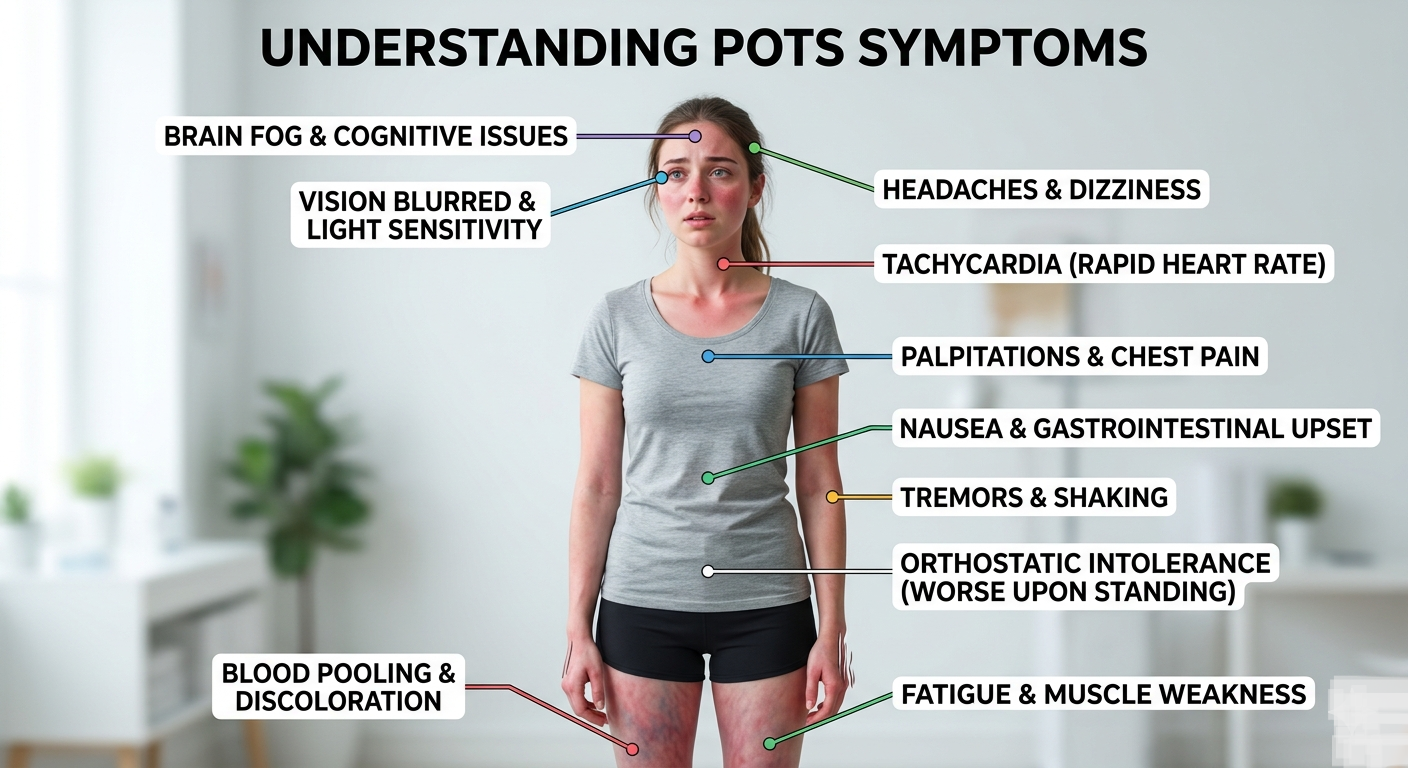
POTS can affect many areas of daily life, including work, school, social activities, and basic routines at home. Tasks that seem simple—such as standing up from a chair, showering, cooking, walking short distances, or waiting in line—can trigger symptoms like dizziness, fatigue, or rapid heart rate. Because energy levels can change throughout the day, many people with POTS need to pace themselves, plan activities carefully, and allow time for rest and recovery. The invisible nature of POTS can also be emotionally challenging, as others may not realize how much effort everyday activities require.
Heart Rate Changes When Standing
When a healthy person stands up, the body automatically adjusts blood flow to keep enough blood reaching the brain. In POTS, this adjustment does not work as efficiently. Blood may pool in the lower part of the body, and the heart compensates by beating much faster to maintain circulation. This rapid heart rate can feel uncomfortable and may be accompanied by symptoms such as chest tightness, shakiness, lightheadedness, or weakness. Although this response can help prevent fainting for some people, it often does not fully restore normal blood flow to the brain, which is why symptoms may continue even when a person remains standing.
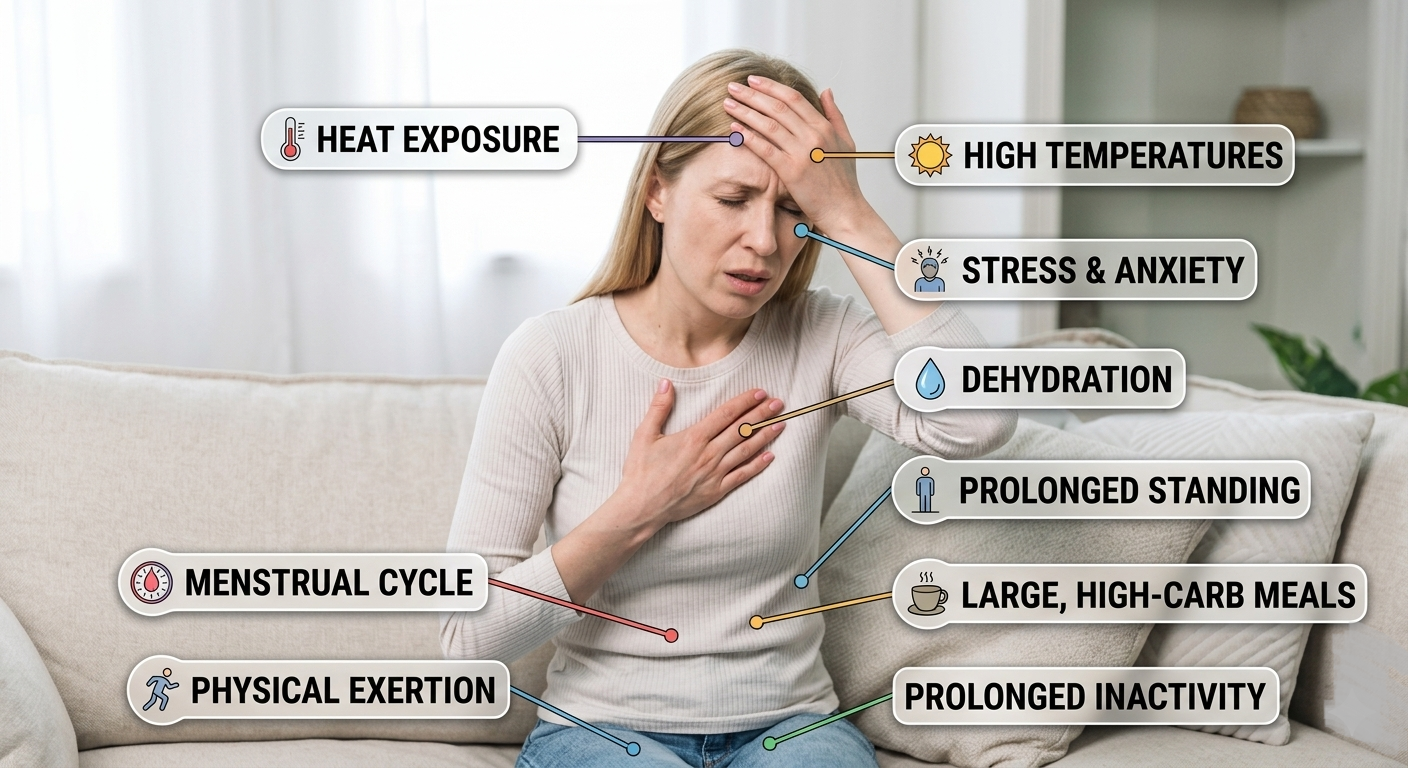
Common Triggers
Certain everyday factors can worsen POTS symptoms or lead to flare-ups. Heat can cause blood vessels to relax, making it harder for blood to return to the heart and brain. Dehydration can lower blood volume, which may intensify dizziness and fatigue. Emotional or physical stress can place extra strain on the nervous system, and standing still for long periods can increase blood pooling in the legs. Illness, lack of sleep, and overexertion may also trigger symptoms for some people. Learning to recognize personal triggers can help individuals plan ahead, avoid symptom spikes when possible, and make small adjustments to daily routines.
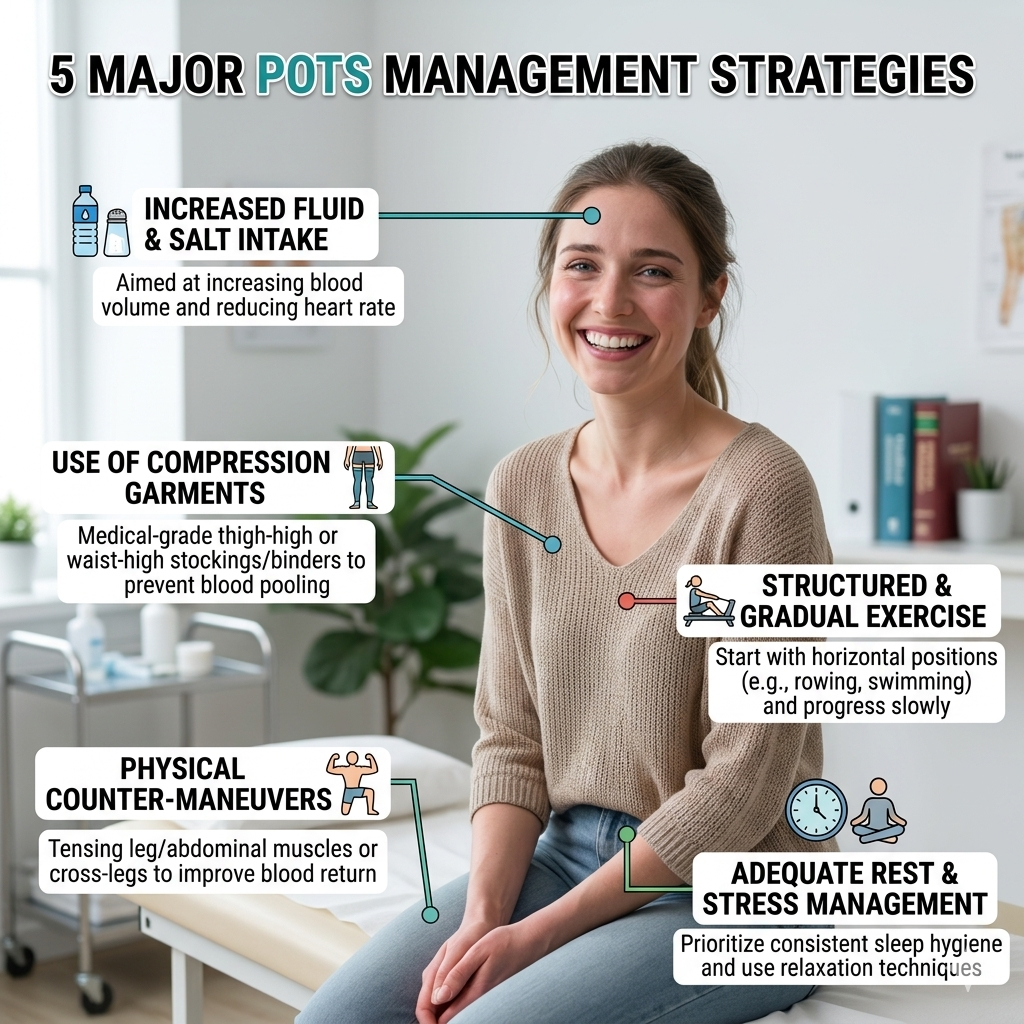
Management Strategies
Managing POTS often involves a combination of lifestyle adjustments and personalized care. Many people benefit from increasing fluid intake and, when advised by a healthcare provider, adjusting salt intake to help support blood volume. Compression garments can help improve circulation in the legs, and elevating the legs while resting may reduce blood pooling. Gentle, gradual movement and pacing activities throughout the day can help conserve energy and reduce symptom flare-ups. Because POTS affects each person differently, working with a healthcare provider to create an individualized management plan can be an important part of improving quality of life and finding what works best for each individual.
Join Our POTS Community — You’re Not Alone
Joining our POTS community gives you the opportunity to connect with others who truly understand the challenges of living with Postural Orthostatic Tachycardia Syndrome. This is a safe and supportive space where you can share your experiences, ask questions, and gain practical tips from people who have faced similar symptoms and obstacles. Whether you’re newly diagnosed or have been managing POTS for years, you’ll find encouragement, empathy, and resources designed to help you navigate daily life with this condition. Our community also provides access to educational materials, guidance on symptom management, and updates on the latest research, so you can feel informed and empowered. By joining, you’re not just getting support for yourself—you’re becoming part of a group that lifts each other up, celebrates victories big and small, and works together to increase awareness and understanding of POTS.
CLICK DOWN BELOW 👇🏻